
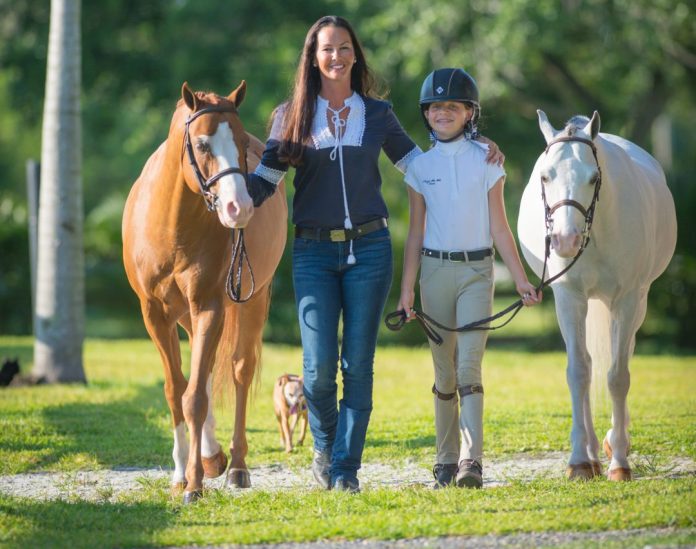
Dr. Stephanie Mazer represents a unique intersection in the equestrian world—a longtime trainer in the hunter/jumper world who has lived and breathed horse culture while pursuing the higher levels of academic achievement in psychology.
Dr. Mazer, a licensed psychologist, is transitioning from developing riders and horses for the top show rings around the United States to focusing exclusively on her private practice clients based out of Wellington, FL and virtually across 42 states.
“Transitions in the equestrian world can be particularly challenging because this is a lifelong sport, and we go through so many distinct phases of our lives together. It can be helpful through these adjustments to work with a psychologist to grow and change the relationships with ourselves and with those around us,” said Dr. Mazer.

Understanding the Psychology of Riding
Riding in the equitation, hunter, and jumper rings requires well-developed mental strength and sophisticated abilities such as being able to manage pressure, regulate nerves, and make split-second decisions with clarity all while following a well-prepared and detailed plan. Confidence, focus, and emotional control become as essential as physical strength, balance, and technique, especially when navigating complex courses or performing under the scrutiny of R judges.
“My philosophy when working with riders is that anxiety is either a barrier or it’s a channel to growth,” Dr. Mazer says. “Whether I’m working with someone to help them with performance anxiety, self-doubt, fear of failure, or real and imagined threats to physical safety, these growth opportunities aren’t just to earn a blue ribbon the following week. They help us in any context, interpersonal relationships, work, really anywhere where anxiety comes up for an individual.”
Skills learned while managing performance anxiety in the show ring translate far beyond equestrian sport, Dr. Mazer emphasizes. They can benefit riders in their professional lives, relationships, and personal development.
A Systemic Approach
What sets Dr. Mazer apart is her systemic approach to treatment, which mirrors the collaborative nature already present in the horse world. Just as trainers work with farriers, veterinarians, chiropractors, and other professionals to optimize a horse’s performance, Dr. Mazer integrates herself into the existing support system around each rider.
Dr. Mazer is licensed to provide telepsychology services across 42 states through the PSYPACT consortium–making her services accessible to the traveling equestrian community. She works with clients virtually at horse shows or provides in-person comprehensive evaluations.
Dr. Mazer’s treatment plans are highly individualized, combining psychodynamic processing with practical performance tools including visualization, mindfulness, and cognitive-behavioral strategies.
She incorporates psychological tools directly into riding lessons when trainers are receptive–using SMART goals (specific, measurable, achievable, relevant, time-bound) to ensure clients experience the confidence-building cycle of setting and achieving realistic objectives.
Her philosophy extends beyond traditional success metrics, embracing a growth mindset that she summarizes with a powerful mantra: “You’re either winning or you’re learning. There is no losing.”
Addressing Familiar Pressures In Equestrian Sports
Young riders face unique pressures, especially regarding parental involvement and investment. Dr. Mazer notes that the significant financial investment in quality horses creates additional pressure layers that don’t exist in many other sports. The quality of the horse directly impacts performance potential, creating a complex dynamic between financial investment and competitive outcomes.
“There are so many people invested in a rider’s success, especially parents,” she says. “Running up to your child as they come out of the ring has a bigger impact than people may acknowledge. Emotions can be contagious, and boundaries are really necessary.”
This insight highlights her understanding of how the emotional environment around young competitors can significantly impact their performance and psychological well-being.
The Future of Equestrian Psychology
Dr. Mazer’s practice reflects an evolution of how the equestrian community approaches mental performance and well-being. By combining deep cultural understanding with rigorous psychological training, she offers a model for addressing the complex psychological demands of equestrian sports while building life skills that extend far beyond the show ring.
Her transition from training horses to exclusively working with riders realizes that the mental game in equestrian sport deserves the same level of professional attention as physical training and horse care—a perspective that could reshape how the industry approaches rider development and performance optimization.