
Horse Spot was all ears at the Orlando, FL USHJA Annual Meeting
Not those kind of ears!
What We Learned at the 2025 USHJA Annual Meeting
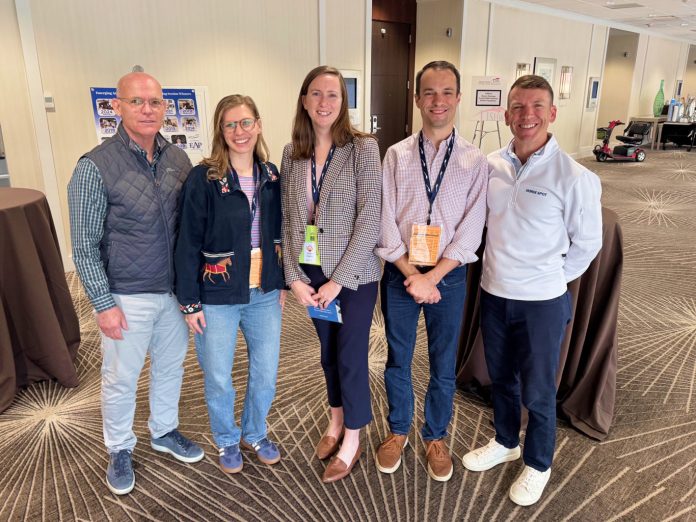
Horse Spot founders Lindsay Lenard, Christopher Lenard, and Michael Lenard attended the United States Hunter Jumper Association (USHJA) Annual Meeting during the week of December 8. As show managers, judges, competitors, and technology builders, staying close to the conversations led by governing bodies isn’t optional—it’s part of our responsibility to the sport.
The Annual Meeting brought together leaders, officials, and members with a shared goal: learning from one another and shaping the future of hunter/jumper competition. Several discussions stood out to our team, particularly around education, horse welfare, and affordability. Below are the key takeaways that resonated most.
1. Education is what the Sport is asking for
Equestrian sport operates within a complex rule framework—and when you’re working with nuanced horse-and-rider partnerships, those protections matter. What became clear throughout the meeting is that education, not enforcement alone, is what people want most.
USHJA leadership consistently emphasized education as a core pillar of their mission. Rather than simply adding rules, the focus is on providing clarity, context, and access to information so members can make informed decisions. From rule interpretation to welfare initiatives, USHJA is making intentional moves to help members understand not just what the rules are, but why they exist.
One of the strongest takeaways for juniors, amateur riders and professionals alike is this: invest time in educating yourself. Ask questions. Take advantage of USHJA’s various grants and educational programs. Seek clarification from governing bodies. Attend meetings like this one. When conversations arise—especially on emotionally charged topics—you’re better equipped to contribute thoughtfully and constructively.
At Horse Spot, this reinforced our own commitment to education—whether that’s around initiatives we’re putting in place around horse welfare, such as our integration with Equi-Trace to help show organizers to better manage horse health documents, or making our platform intuitive and accessible for everyone who uses it.
2. Data leads the way
Horse welfare was one of the most prominent and serious topics discussed throughout the meeting. What stood out wasn’t just the data presented—but the transparency around what the data can and cannot tell us.
USEF shared preliminary overuse data compiled from 2024 competition results, noting that the 2025 competition year is still ongoing and that many results are still being submitted. The intent wasn’t to draw conclusions, but to establish an initial, high-level view of participation patterns and identify areas that warrant deeper review.
At a broad level, the data showed that horses across hunter and jumper divisions compete at an average rate of approximately one class per day, based on 82,720 competing members and 356,986 horse entries. Just as importantly, USEF clearly outlined the limitations of this dataset:
- It includes USEF‑sanctioned competitions only, with no visibility into non‑sanctioned shows.
- Class dates aren’t always captured, meaning multiple classes may occur on a single day.
- There is no insight into warm‑up routines or activity on non‑competing days, which also factor into overall workload.
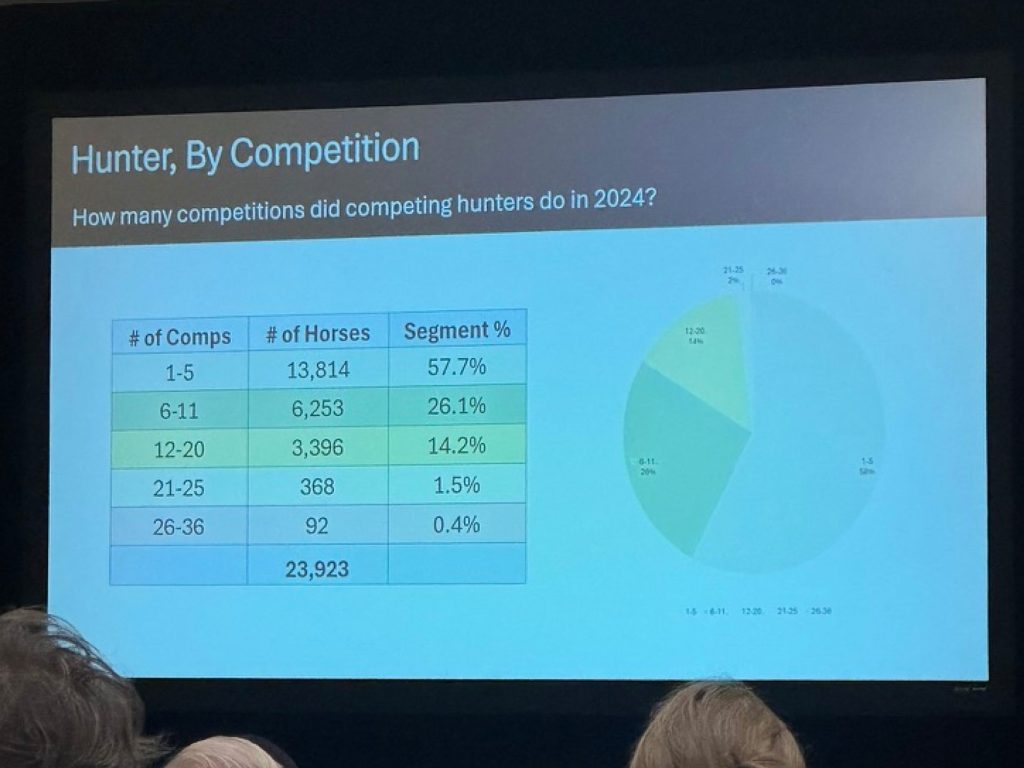
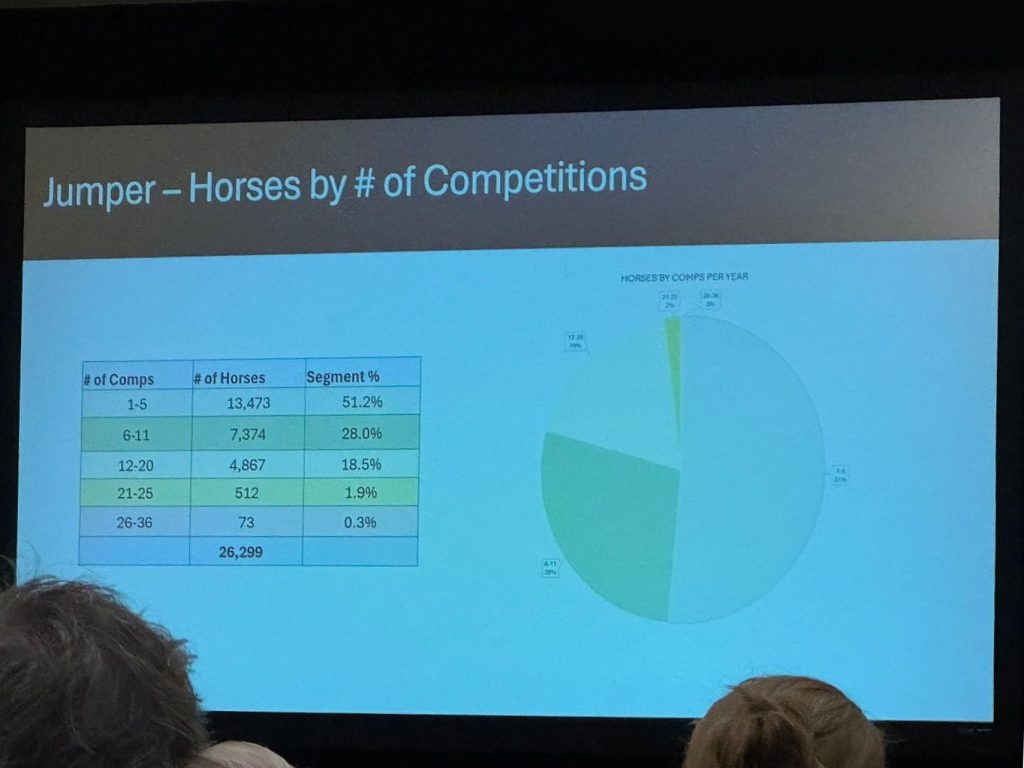
This transparency mattered. It showed that USEF is taking horse welfare seriously—bringing in data analysts, questioning assumptions, and identifying where additional insight is needed before drawing conclusions or implementing new regulations.
USEF CEO Bill Moroney addressed the emotional nature of these discussions, noting that while social media can amplify panic, decision-making must be grounded in facts—not myths, innuendo, or emotion alone.
We agree. Emotion reflects how deeply people care about horses—but data is what allows us to turn concern into meaningful action. Data helps identify patterns, outliers, and moments where intervention may be necessary.
It also raises an important opportunity: can horse show technology help provide a more complete, connected picture—across sanctioned and non‑sanctioned competitions—while still respecting nuance and individuality? The conversations at the Annual Meeting suggest that this is a question worth continuing to explore.
3. Affordability is a Hot Topic
Affordability emerged as one of the most candid and widely shared concerns throughout the meeting.
During an open forum, Horse Spot founder Christopher Lenard posed a straightforward but difficult question to USHJA and USEF leadership:
“How do we make the sport more affordable?”
The response was refreshingly honest—there is no single answer. Horse shows are expensive to produce, and rising costs affect everyone involved, from organizers and officials to riders and owners. Boutique shows, in particular, are feeling the strain as they work to balance quality experiences with financial sustainability. Rather than searching for a quick fix, the discussion focused on approaching affordability through a thoughtful cost-analysis lens.
Ideas ranged from exploring more one-day show formats to taking a closer look at which venue upgrades are truly essential versus simply nice to have. One lighthearted story reshared during the discussion captured the spirit of the room: a course designer had once been asked about his favorite footing, and instead of naming a premium surface, his answer was simply grass. He joked that he even loved riding in the mud because it slowed his Thoroughbreds down—an anecdote that drew laughter and underscored a broader point about practicality and perspective.
The moment sparked a deeper reflection: do we need to revisit more grassroots approaches to showing? What genuinely adds value to the experience, and what unintentionally adds cost? The answers will vary by discipline, level, and region—but the willingness to ask these questions openly is an important step forward.

Technology as the Connector
As conversations around education, data, and affordability unfolded throughout the meeting, one recurring theme became clear: technology has the potential to help these efforts work together—when it’s applied thoughtfully.
USHJA President Britt McCormick posed the question directly: How can technology meaningfully improve the horse show experience—not just at the highest levels of the sport, but for shows of all sizes? It’s a question that resonated across discussions.
One perspective shared by Horse Spot founder Michael Lenard was that meaningful progress doesn’t come from any single platform working in isolation. Instead, it comes from collaboration—between governing bodies, show organizers, and technology providers—to simplify processes rather than add new layers of friction.
At Horse Spot, this philosophy guides how the platform is built and how partnerships are approached with integrations with other tech providers like Equi-Trace and a direct API integration with USHJA—allowing competitions of any size to verify membership information accurately and seamlessly.
The broader takeaway was clear: technology works best when it connects systems, improves visibility, and supports the people running shows on the ground. When used intentionally, it can reinforce education, strengthen data integrity, and help make horse shows more accessible.
Final Thoughts
The 2025 USHJA Annual Meeting reinforced something we strongly believe at Horse Spot: the future of the sport depends on education, transparency, responsible use of data, and open dialogue.
There are no quick fixes—but there is progress. The seriousness, humility, and thoughtfulness demonstrated throughout the meeting left us encouraged. When governing bodies acknowledge both what they know and what they’re still working to understand, it creates space for collaboration and smarter solutions.
We’re proud to be part of an industry willing to ask hard questions—and committed to building tools that help support the answers.
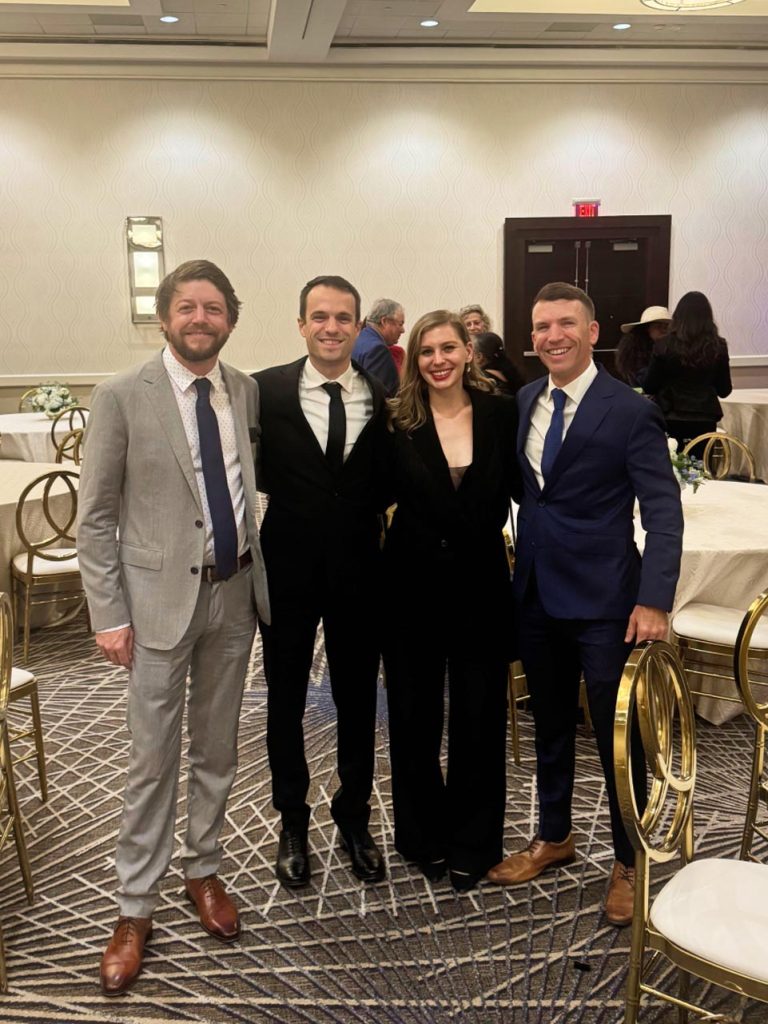
Now for some fun photos of us dressed up for the awards dinner because helmet hair as you know, is a real thing.