
BY PIPER KLEMM
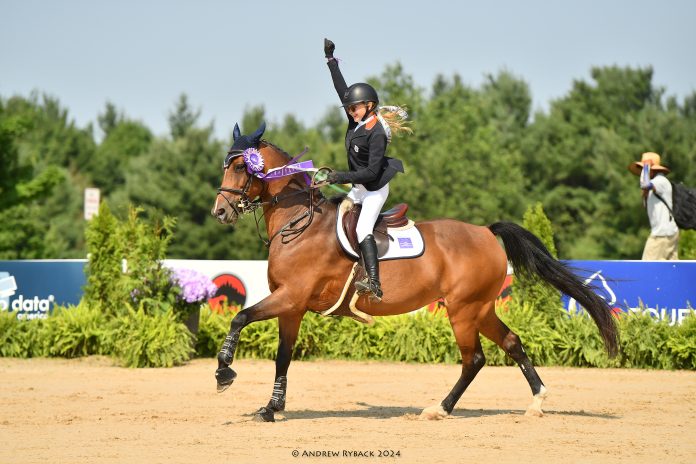
There is a particular kind of rider who grows up not just around horses, but truly inside the world of them. It seems like such an advantage to the rest of us to be carried in the barn in a baby carrier smelling of horses and finding comfort in farmwork, riding, and a familiar comfort around horses before one can even remember. Not all who are raised in a barn turn out to love it on top of that or have the required boldness, grit, and disciplined work ethic to then move up the ranks in competition as well. But lifelong equestrian Ryan Haselden would rather be pulling a mane at 6 am on a Saturday than sleeping in, and at just 15 years old and already typically competing in open and professional classes, she’s been making her case that we all had better pay attention to her journey.
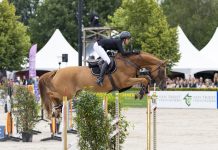
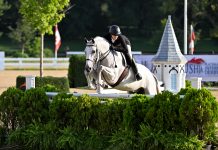
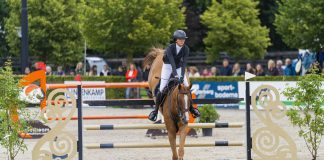
Raised with an equestrian family where horses are simply a way of life, Ryan has spent the better part of the last year reaching milestones that most riders only dream about, including winning the Children’s Team silver and gold at the 2024 and 2025 North American Youth Championships, competing and ribboning in her first Grand Prix, and laying the groundwork for an international competitive career that already stretches from both stateside from Georgia to New York to Ocala to Traverse City, but also internationally in Paris and Dublin.
Instead of ribbons, Haselden and her team are choosing a schedule to focus on tough competition, building skills, and developing a thinking rider who is ready to compete at the most difficult, crowd-filled, and intense venues in the world. They’re making it as tough as they can on her now so that when the time comes, she’s ready to compete internationally at the top of the sport and nothing seems novel or new to her preparation. It’s a unique take on what the current American system does and doesn’t have to offer young riders in 2026.
Born in the Barn
Ryan’s mom Lindsay was already an accomplished equestrian when she met Will Haselden in high school. “My dad didn’t even know people still rode horses!” laughed Ryan. Will immediately fell in love with the horses, learning all about horsemanship, farmwork, and to ride from Lindsay. Together they worked at farms until Lindsay branched out and started her own business, which allowed them to raise Ryan around horses, simply riding and having fun with a beloved gelding named Fable (who is still part of the family today), and learning with no pressure as part of their day.
“I started doing it more competitively around eight years old,” Ryan says. “I got my first pony and started doing little short stirrup stuff, and then I transitioned into the jumpers pretty shortly after.”
The move to the jumper ring was, in many ways, inevitable. The barn was a jumper program. The riders around Ryan were jumper riders. And Ryan herself had a personality perfectly suited to the discipline.
“I like going fast and trying to win,” she says simply. “I didn’t like to have to be fancy or care about whether I swapped.”
After Fable came a pony named Cocoa—her first real jumper—and then Blondie, a mare who carried Ryan up through the 1.20 m and helped her earn her first championships. Each horse left its mark, teaching her something new about pace, partnership, and what it means to compete.
Lindsay’s jumper program, which she runs with her partner Megan Thiel in Atlanta has close to 40 clients and Will is able to travel with Ryan to competitions outside of the training business. Beyond dad and cheerleader (he excels at staying calm and out of the trainers’ lane), Will also acts as Ryan’s groom, photographer, sounding board for big ideas, and travel agent.
Today her string includes Carla, a spicy little bay mare who made the trip to NAYC Children’s in 2024 and completed Ryan’s first 1.30 m; Hector, a nine-year-old who has become as important to Ryan as any horse she’s ever sat on; and Maeberry, a mare owned by Matthew LeMaster and Kristina Photakis, whose generosity in lending Maeberry to Ryan, has opened doors to some of the most exciting moments of her young career.
The Mentors Who Shaped Her
Behind every great junior rider are great teachers, and Ryan has been fortunate to have two of the best as practically family. Edward Doyle (“Mr. Edward”), as Ryan calls him—has been part of the Haselden family’s world for nearly two decades. Based in Ireland, he has trained Ryan since she was young, traveling to the United States to work with her here and welcoming her to Ireland every year to train and compete on his side of the Atlantic. The relationship stretches beyond instruction; it is a true partnership of the American and European riding systems built on mutual respect and a shared collaborative vision for where Ryan can go in this sport.
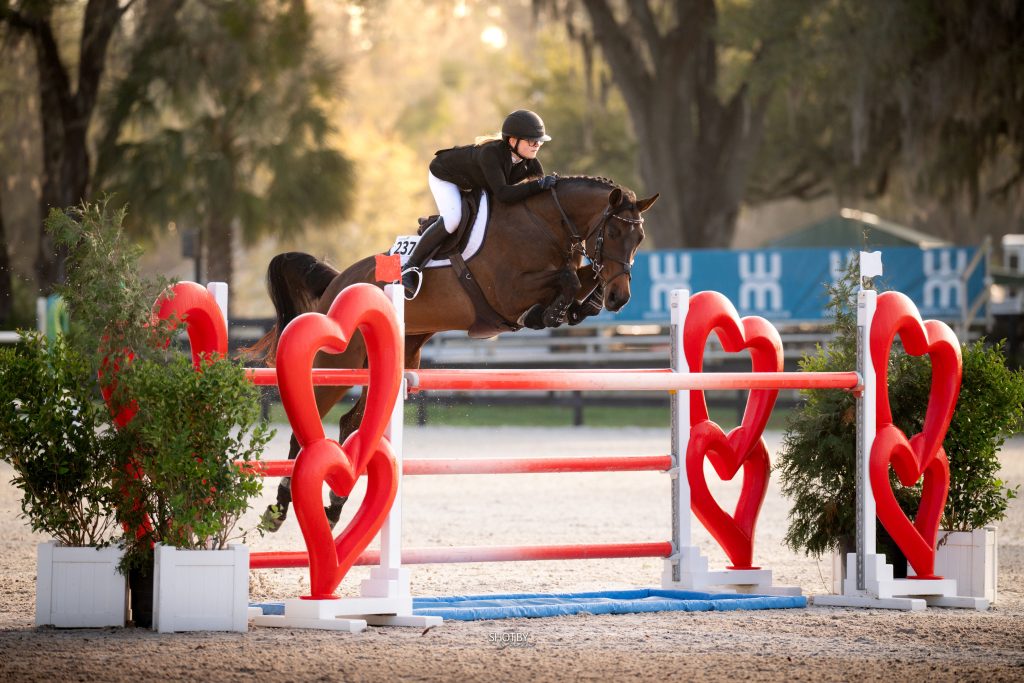
Declan Egan (“Mr. Deckie”) serves as Ryan’s trainer stateside. His connection to the program runs deep: Deckie is Edward’s nephew, and the two have created a seamless training environment for Ryan that bridges continents. Deckie rides Hector regularly to ensure the horse is confirmed and comfortable, as he is as unproven and green as Ryan is, as they move up the ranks for the first time together. Egan’s steady presence in Florida and at the horse shows gives Ryan the consistency every developing rider needs.
Will describes the philosophy simply: how many different arenas can you get into, and how often can you compete where the lights are brighter, so that when the biggest moments come, you feel a little more at home? Will takes decades of analyzing and studying the sport into a long-term approach for his daughter in a sport that constantly tempts riders to win at the easiest level available.
“When she goes to the national final and the pressure is on,” Will explains, “she is used to having to step up her game to beat professionals and in front of huge and hungry crowds. It makes those lights less bright when you get to that final stage, and you can keep your heartbeat level and execute your plan.”
A Truly International Rider
One of the most distinctive aspects of Ryan’s development as a rider is its international character. Long before most American junior riders have set foot outside the country to compete, Ryan has accumulated meaningful experience on the world stage. Over the last several years traveling to train with Doyle, she has competed in Ireland and Paris working on qualifying for and taking on larger and more formidable challenges.
Currently, Haselden is preparing to compete at the Royal Dublin Horse Show this coming August in the Young Riders classes, which is a goal made possible by her long relationship with Doyle, who has a horse there he believes she can do it on. The qualification standard is formidable: twenty young riders total are chosen across four qualifiers, with approximately 110 to 120 in each class and only the top five advancing. Having defied odds her entire life, Haselden smiles undaunted while explaining the qualification process.
“It’s not easy,” Ryan acknowledges. “But it’s possible.”
The experience of catch riding in unfamiliar environments, jumping against professionals in Europe and at home, and navigating different competitive cultures has given Ryan a versatility and composure well beyond her years. She is comfortable on horses she doesn’t know, in rings she has never seen, under pressure that would unsettle a less prepared rider.
“The philosophy has been: how many different arenas can you get into?” Will says. “She is always preparing for how to answer new, more complex, and more challenging questions in any situation.”
Venice, and What Came After
The story of Ryan’s young life cannot be told without addressing what happened at Venice, Florida in early 2025. Midway through a 1.20 m stake class on Hector, who was a relatively new ride at the time, Ryan blacked out approaching the fourth fence. She woke up moments later on the ground, surrounded by people, with no memory of what had happened. It was her birthday.
The diagnosis that followed was both a relief and a shock: Catecholominergic Polymorphic Ventricular Tachycardia or CPVT, a rare genetic cardiac condition affecting approximately one in ten thousand people. Ryan now has an ICD, an implantable cardioverter-defibrillator, and manages the condition with heightened awareness of how she feels and careful attention to hydration.
“It hasn’t really changed my life that much,” she says. “I just have to be kind of cautious and drink a lot of water. Other than that, I can still do everything I want to do.”
If anything, Ryan’s riding has improved since Venice. She returned to the North American Youth Championships on Hector, the same horse, the same partnership, and won gold with what she describes as the best team she could have asked for. She went back to Venice and completed her first Grand Prix on Maeberry. She has jumped bigger than she ever had.
The experience also ignited something beyond the competitive. Together with her family, Ryan founded the Impulsion Foundation, which advocates for AED (Automatic External Debibullator) availability at horse shows and has sponsored CPR (Cardiopulmonary Resuscitation) and AED training in their local community. Ryan is an outspoken advocate both personally and to various governing bodies on the subject.
“I definitely think every horse show should have an AED on site,” she says. “And at big shows like Wellington, I think they should have one at every ring, because if it’s on the other side of the property, you can’t get it there quick enough. People should know how to be CPR trained. Without that, things would look much different for me today.”
The Work Behind the Wins
Raised on the farm and following along with her parents’ footsteps means that Haselden is a worker both in the saddle and out of it and has been from the beginning. She braids all of her own horses, a skill her father taught her before she was tall enough to reach without a stool. She cares for her horses after riding, doing the ice boots and the post-work routines herself. She wakes up early to spend time in the barn, not because she has to, but because it is one of her favorite things to do.
“Taking care of them is one of the most important things,” Ryan says. “That’s when you really start to get to know their personality. Riding them is just a small part of this. I think that’s all important to keep learning as much as I can.”
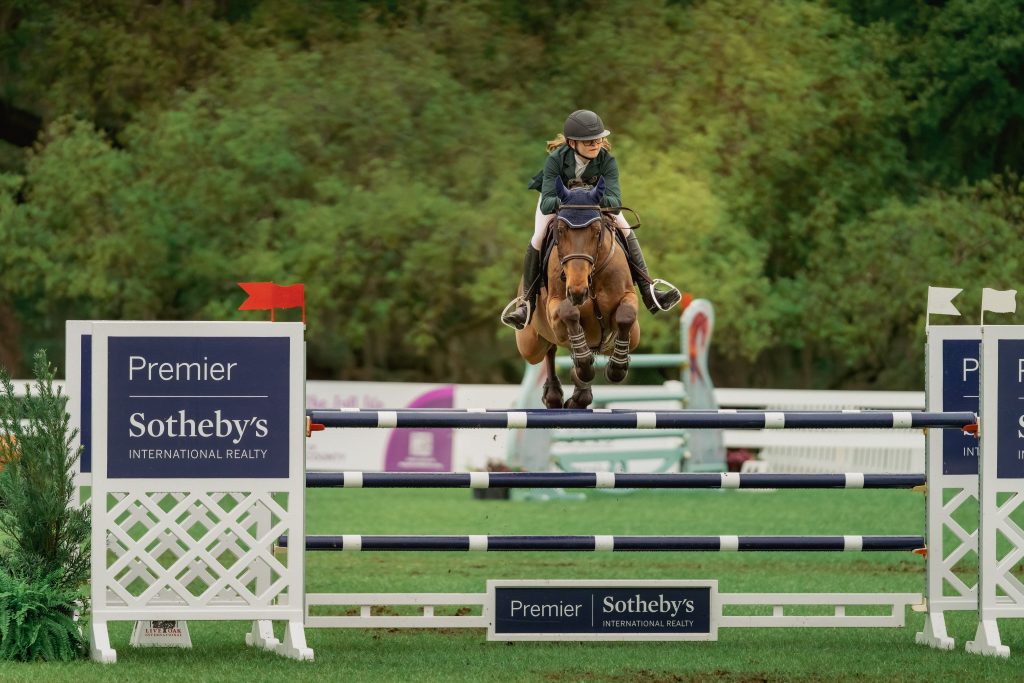
Her mother’s background gives her unusual depth on the veterinary side. Lindsay Haselden spent time as a practicing veterinarian technician, and that knowledge has been passed steadily to Ryan throughout her life. The family breeds a small number of horses, which means Ryan has been present for foalings, illnesses, and the full arc of equine care since childhood. She can read a baseline, recognize early signs of lameness or colic, and speak fluently about the health and management of horses in ways that most riders her age simply cannot.
“We’re out there whenever something needs to be done,” Ryan says. “Take care of a horse, ride a horse, whatever it is.”
She also brings an academic curiosity to the breeding side of the sport. Ryan looks up the pedigrees of every horse in her barn, studies the bloodlines of top competitors, and finds genetics (both equine and human) genuinely fascinating. It connects directly to her favorite subject in school: biology.
Keeping It Fun
For all of her seriousness about competition and development, Ryan and her family are equally deliberate about keeping the joy alive in horses—the kind of joy that has nothing to do with warm-up rings or jump-off times.
Foxhunting with her parents is a regular part of life, offering a different kind of boldness and partnership with a horse than the show ring requires. Hacks on the beach, trail rides through the Georgia countryside, and mixing in cross-country and dressage work keep the horses and the riders from going stale. These aren’t concessions to downtime; they are part of the same philosophy that brought Ryan to Europe and into big classes against professionals. Varied experience makes better horses and better riders.
“They definitely all love their jobs,” Ryan says of her horses, and the feeling is clearly mutual.
Life Beyond the Barn
Ryan attends Rivers Academy, a hybrid school in Georgia that has become a favored option among equestrian athletes. She goes three days a week for half days and works with the school to build travel plans that accommodate her competition schedule, a schedule that, in a big year, might include circuits in Florida, Kentucky, Ireland, and major championships in between.
She takes her academics seriously, particularly enjoying math and biology with recent interest in a genetics unit taking her to exploring barn breeding from a new lens. Away from horses and school, Ryan has developed a passion that might surprise those who only know her from the show ring: she is learning to fly airplanes. The sky, like the jump course, demands calm precision, spatial awareness, and the ability to read a situation in real time. She loves it and hopes that one day she will earn her license. For now, her ICD makes that goal a future one rather than an immediate one, but it is a goal she holds onto with the same quiet certainty she brings to everything else.
What’s Next
Ryan enters the rest of 2026 with a full calendar and clear ambitions. NAYC is in her sights again, this time chasing Pre-Junior glory, a goal that requires finishing in the top four in her zone with sufficient prize money at the 1.30 m and above. It is not an easy target, but Ryan has never been drawn to easy targets.
The Royal Dublin Horse Show in August looms large. The qualifiers in Ireland are in the plans, and the RDS itself represents a chance to test herself on one of the great stages of international show jumping, the kind of place where history hangs from the rafters in the form of championship banners going back decades. Medium-term, Ryan has her eyes on being a top-ten junior on the U25 list, a ranking she becomes eligible for next year.
Through all of it, the goal remains consistent: become the best rider she possibly can be, give her horses the best care she possibly can, and build something worth building—one class, one country, one relationship at a time.
“I want to be the best I possibly can be,” Ryan says. And from where she is standing, there is every reason to believe she means it.
Trainer Info
Declan “Deckie” Egan is an Irish-born show jumping professional whose journey from the rolling countryside of Ballinasloe, Ireland, to the top rings of American equestrian sport is a story of passion, courage, and hard-earned success. His love affair with horses began at age five, when he begged his mother to sign him up for lessons at Creagh Equestrian Center with Damien Carey — and from that first ride, there was no looking back. Inspired by his uncles Edward and Jack Doyle, Deckie spent his formative years progressing from ponies to horses and soaking up every day he could spend at the barn, catching buses to Kildare just to get to horse shows.
After finishing school, he launched his professional career working alongside his uncle Edward, Haselden’s trainer as well, before joining Bourns Sport Horses, where he spent seven years developing young horses all the way through to Grand Prix level. Then, in a move that defined the trajectory of his career, Deckie stepped off a plane in Orlando in February 2017 with just one suitcase, a few pairs of breeches, and a plan—joining Eamonn Hughes’ operation in Ocala and ultimately staying for six years before founding his own Birchgrove Sporthorses in January 2023.
Today, Birchgrove is a thriving operation focused on horse and rider development, with a string of horses ranging from amateur-friendly packers to Grand Prix competitors, a testament to the vision and dedication of a man who arrived in America with almost nothing and built something truly remarkable.