
BY KIMBERLY KOVACIK
Have you ever woken up one day sick of rummaging through social media to try to track down which Thoroughbred sires and dams have produced Thoroughbred sport horses? But since you’re a numbers person, you want actual numbers that show who these sires and dams were that have produced offspring that potentially raced/did not race and competed in USEF rated shows.
Well, I did one morning back in January 2025.
As an internal auditor by trade who loves to play in Excel and Power BI, I got an idea. I reached out to USEF, and Allyson Mattingly provided a population of 23,909 Thoroughbreds with USEF recorded events. As an auditor, I sat here wondering what attributes I even wanted to consider looking at.
At the end of the day, the information I looked at for these horses included the following attributes:
- Year foaled
- State foaled in
- Breeder
- Sire
- Dam
- Physical attributed
- If they were an OTTB
- # races ran
- $ won
- # years they raced for
- Age they started racing
- Distance/Sprinter horse
- Turf/Dirt/Steeplechaser
- Was Mr. Prospector, Native Dancer, or Northern Dancer in their pedigree
- Was Secretariat in their pedigree, inbreeding through the 5th generation
- and other notes (notable progeny, notable races won, notable names in pedigree etc.).
Did I do this for all 23,909 horses? Well, not quite, just 937 horses—45 mares, and 892 stallions. The 937 came from the aggregate of Thoroughbred stallions that produced 6 or more offspring with USEF records, or mares with 4 or more offspring with USEF records.
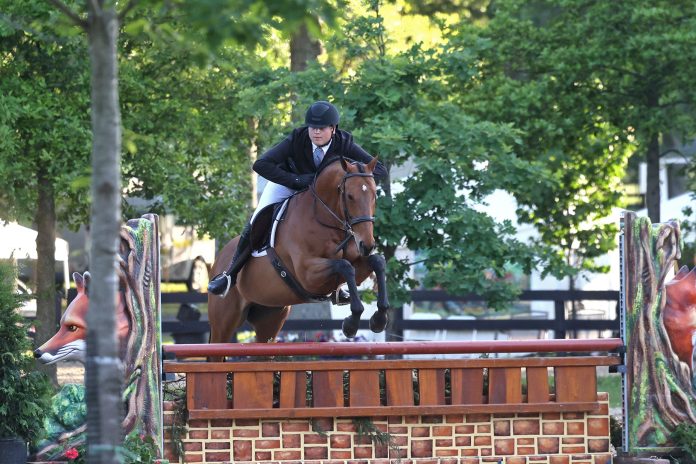
It is so wonderful to see, over the past few years, the resurgence of the Thoroughbred in horse shows, with the most recent example being the $25,000 Thoroughbred Hunter Derby at Upperville! They are incredible horses that, once you form a bond with them, will go to the end of the world and back for you.
When was the last time Thoroughbreds were dominating the hunter/jumper world? The 80s? The 90s? How many people today know the importance and relevance of Native Dance, Mr. Prospector, Northern Dancer, or Secretariat? Probably not as many as there should be.
Diving into my above point, I want to start with Native Dancer. Specifically, the Native Dancer hate. Is it warranted? Is the Gray Ghost haunting us nearly 60 years later? Why do we hate him again? Who even is Native Dancer?
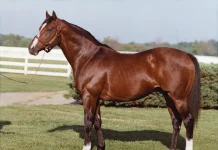
Native Dancer was foaled on March 27th, 1950. Bred by Alfred G. Vanderbilt II by Polynesian out of Geisha. Native Dancer raced 22 times. He won 21 of those 22 races, with a single loss in the 1953 Kentucky Derby. His accolades include winning the Futurity Stakes, the Dwyer Stakes, the Travers Stakes, the Wood Memorial, the Preakness, and the Belmont.
So why does this Stallion get so much hate? Achilles had the heel; Native Dancer had the ankles. Native Dancer’s sire, Polynesian, was plagued with fragile legs and tendons and suffered with soundness issues during the course of his career. As described in M.A Stoneridge’s book “Great Horses of Our Time,” Native Dancer was “…built like a sprinter in the front and like a stayer in the back.”
Stoneridge additionally noted Native Dancer’s weak ankles and hoofs, which were spotted by experts from the start of his career. Unfortunately, the weak ankles and hoofs were passed down to some (not all) of his offspring. Which is where I believe much of the Native Dancer hate started.
Horse breeding is tricky. I do not claim to be a breeding expert, but from all of the reading I’ve done over the past year and a half, the advice I can leave you with is that it is important to have an understanding of confirmation and family history (weak ankles, poor hoof condition, mean temperament) when breeding a horse.
I read an article from Past the Wire that had some interesting points, “Native Dancer’s Genes: Too Much of a Good Thing? – Past The Wire,” to consider on Native Dancer. Around 90% of Thoroughbreds today have Native Dancer in their pedigree. Why? Because he produced very successful offspring. Two of those offspring are Northern Dancer and Mr. Prospector, which I will cover next time. Of the 892 stallion pedigrees I reviewed, 628 of the 892 had Native Dancer in their pedigree at least once. Of the 46 mare pedigrees I reviewed, 18 of the 46 had Native Dancer in their pedigree at least once. Many of these horses were big-money and graded race winners. Horses are a gamble through and through. Especially when it comes to breeding.
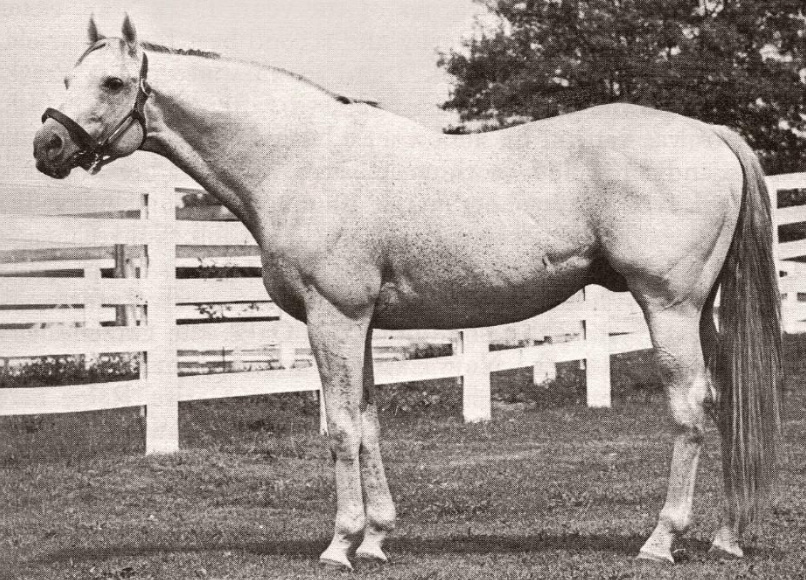
My message to all is, Native Dancer may not have had the best ankles, but he produced many successful offspring, many of which did not have ankle/foot issues. A fun parting nugget about Native Dancer from M.A Stoneridge’s book “…Native Dancer loathed dogs but was fond of cats…particularly the black stray cat that wandered into his boxcar on one of his many railroad trips.”
Next up in the series are Northern Dancer, Mr. Prospector, Secretariat, and Bonne Nuit.
As this continues to be a work in progress, please see my link to my attribute review spreadsheet of the 937 Thoroughbred pedigrees I reviewed (https://docs.google.com/spreadsheets/d/1TBD1B-5eNnxkcMdbLUVlf1faYhE7egZ4jnuRm5DHHJQ/edit?usp=sharing).
If you have any information you’d like to share or add for these horses, please contact me at thethoroughbred.pedigree.project@gmail.com, I would love to talk to you and learn more to share with others!
Kimberly Kovacik is a Senior Audit Manager at a top-10 bank, leading robust internal audit functions for the organization’s Wealth Management business. When she’s not working, Kim enjoys living the adult ammy life in the jumper ring (and sometimes Hunters and Eq because it’s fun), traveling, and analyzing Thoroughbred pedigrees.
Some recommended reading to share that has helped me over the past year and a half:
Chapot, Frank, and Newman, Arlene J. “Winning with Frank Chapot.” Breakthrough Publications, 1992.
De Nemethy, Bertalan. “The De Nemethy Method – Modern Techniques for Training the Show Jumper and Its Rider.” 1st ed., Bantam Doubleday Dell Publishing Group, Inc., 1988.
Montgomery, E.S. “The Thoroughbred.” 4th ed., Arco Publishing, Inc., 1980.
Steinkraus, William. “New and Revised Edition: Riding and Jumping.” Doubleday & Company, Inc., 1969.
Stoneridge, M.A. “Great Horses of Our Time – Foreword by William Steinkraus.” 1st ed., Doubleday & Company, Inc., 1972.