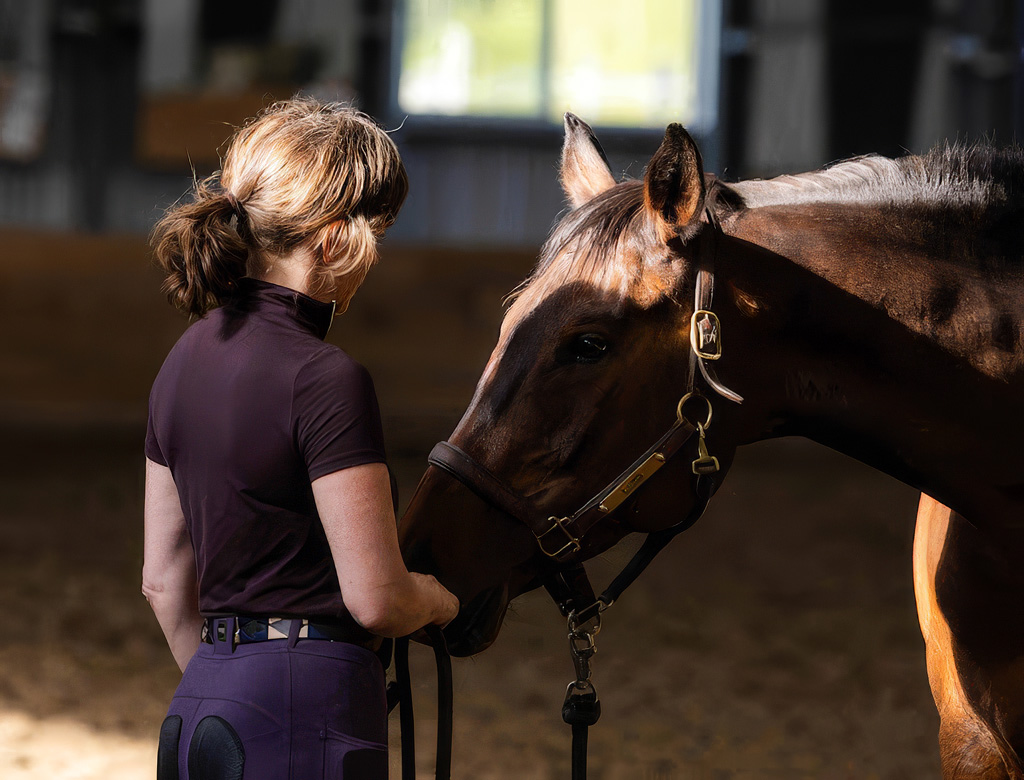
BY SARAH LOUISE LILLEY
I have taught EFT Tapping for equestrians at events like Equine Affaire, the U.S. Pony Club Convention, Warwick Schiller’s Journey On Summit, and talked about it on podcasts. At every Q&A, someone has asked:
“Can you tap on horses?”
It felt like a sign I couldn’t ignore anymore, so I started experimenting.
What is Tapping?
EFT (Emotional Freedom Techniques), also called “Tapping,” is an evidence-based somatic tool that combines elements of modern psychology with the ancient art of acupressure. Using your fingertips to gently tap on specific acupressure points, Clinical EFT can be used to release the root causes of PTSD, trauma, phobias and anxious thinking. You can read more about Clinical EFT HERE.
However, EFT can also be used as a simple everyday stress reduction tool. EFT gives you a simple, accessible way to regulate your emotions and support your nervous system through life’s inevitable ups and downs.
I began trying the EFT Tapping points on my own horse, Luna. And I loved watching her respond. Her eyes would soften; she’d lick and chew, yawn, or stretch. As I dove deeper into acupressure for horses, I became fascinated by the power of co-regulation and how gentle touch can support a shared physical and emotional reset. Acupressure is simple and deeply grounding. And it gives me another way to spend quiet, connected time with my mare.
Yes, I love riding. I love the moments in a lesson where something finally clicks. I love the exhilaration of cross country. But I also love hanging out with her after a ride. Or taking her for a walk. I love sitting in her field as she grazes. Those moments when we both seem to exhale, and everything slows down.
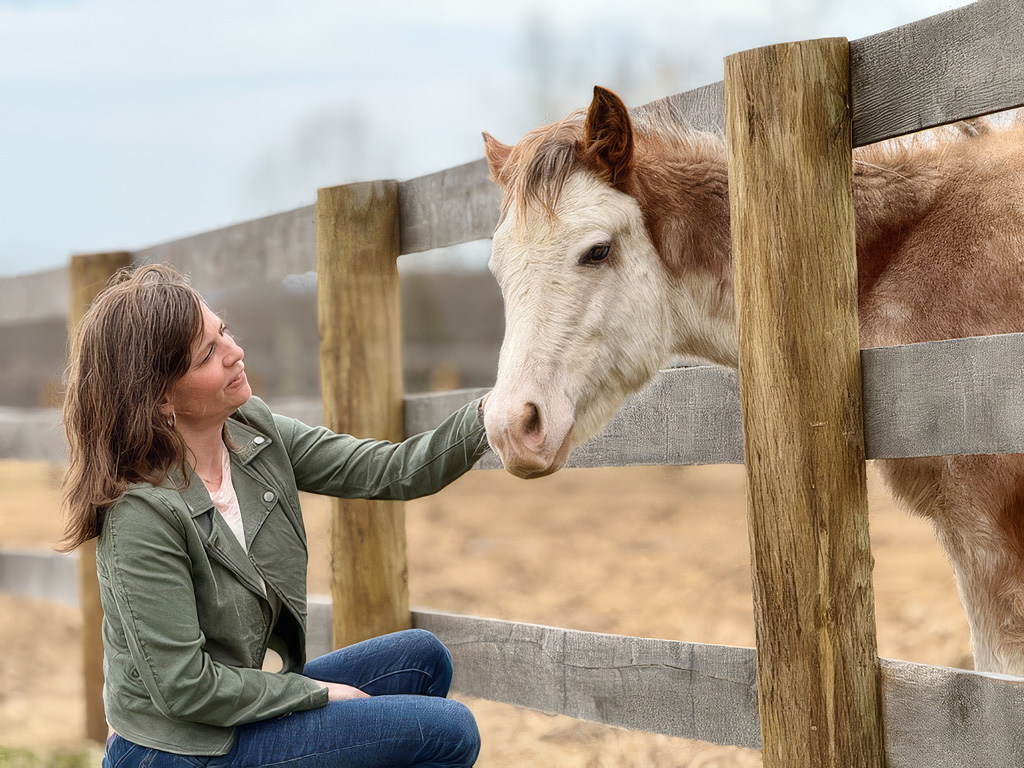
EFT was also something I could easily share with my clients through simple acupressure practices they could explore with their own horses. It can be especially helpful on days when you don’t feel like riding but aren’t sure what to do instead, when your horse has time off, but you still want to maintain that sense of connection, or when life feels busy and taking a little time to slow down with your horse sounds exactly like what you need.
There’s something really empowering about learning a few simple ways to work with your horse’s body while also learning to slow down, observe, and notice what your horse is telling you.
EFT is a tool you can use with your horse, at the barn, at work – or anywhere in your life.
Let me take you through a quick exercise to see for yourself.
First, locate the K27 acupressure point. On humans, you’ll find it just below the collarbone, about two inches out from the center, on either side.
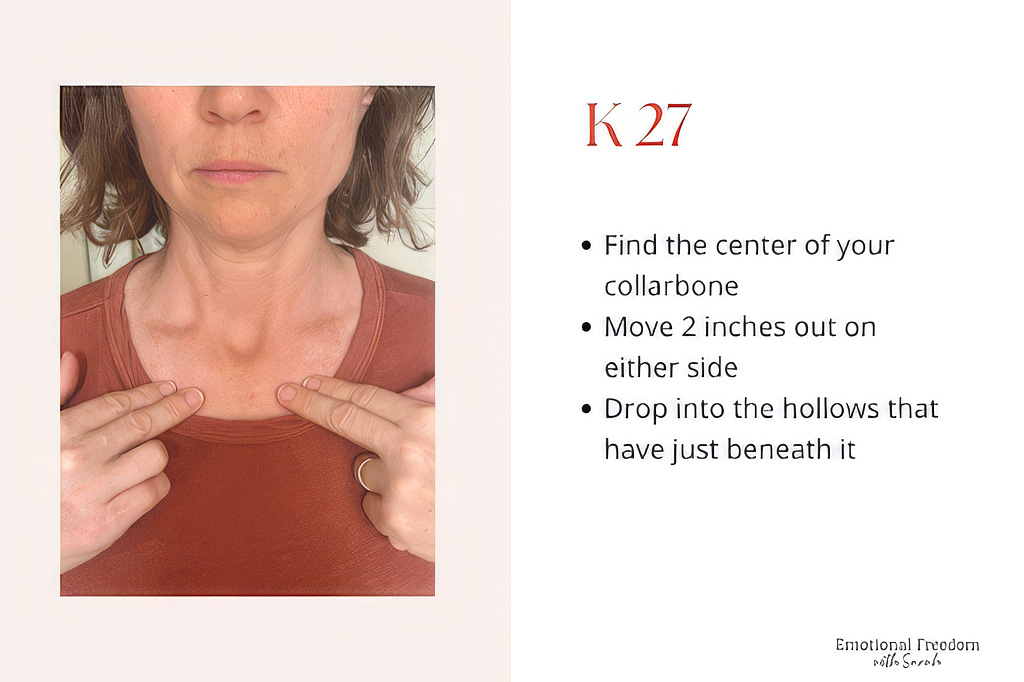
Fun Fact: K27 is great if you’re feeling a little anxious, as it’s a very grounding point. Some practitioners also call it the “coffee point” because if you’re feeling a little drained, it can give you an energy boost.
Take a minute or two to gently tap the point with two to three fingers. Make sure you keep breathing. You can tap one side or both sides, whatever feels most comfortable. You can also massage the point if that feels better; the intention is simply to activate it.
K27 is a very discreet point; I often tap it when I’m walking to downregulate my nervous system. I think of tapping points as little “off-switches to my cortisol,” the stress hormone – an effect supported by clinical research (Stapleton et al., 2020).
Simply notice any small shifts.
Once you have the hang of it, try K27 with your horse.
For horses, K27 can function in a similar way. It may help release soreness through the shoulders, neck, or chest, provide a calming and grounding effect when a horse feels tense or anxious, and help balance energy when they seem lethargic.
Step One: When working with your horse, take a moment to tap or ground yourself first.
Step Two: Locate the K27 point on your horse: on their chest, level with the point of the shoulder, about one to two inches from the center midline.
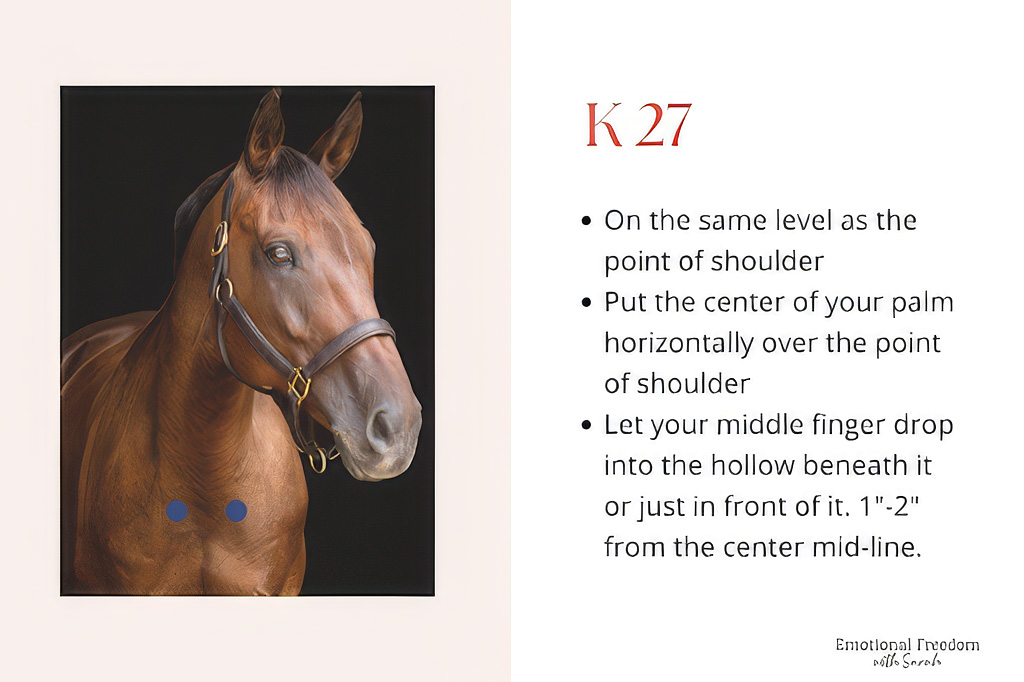
Step Three: You can gently rest your fingers on K27, or rest your whole hand gently where it lands.
Acupressure with horses is an invitation to do less and let your horse lead the way.
Step Four: Just observe your horse. You can stay there until you notice a subtle shift (30 seconds to 2 minutes). Keep breathing and notice if their breath changes, if their eyes become soft, maybe they lick and chew or yawn. You can then repeat the process on the other side of your horse.
If your horse shows any signs of upset, step back and give them a moment. Check yourself first – notice if you’re holding your breath; perhaps try approaching more slowly and using less pressure. Some horses prefer an “air gap” where you’re not quite touching them. This brings a gentle awareness to the point, and their body will still find some release.
If they’re still showing any sign of resistance, let it go. Some horses like different points on different days; some horses don’t like certain points, and that’s okay. There are lots of other points!
You don’t always need to do more with your horse to deepen your connection. Sometimes, it’s about slowing down enough to notice- your breath, their breath, a softening in their body, or the moment you both seem to exhale. These quiet moments may not look like much from the outside, but they can become some of the most meaningful parts of your partnership. Tapping and acupressure have given me another way to create those moments of listening and simply being together.
Sarah Louise Lilley is a clinical EFT practitioner who helps equestrians overcome fear, blocks, and trauma so they can reconnect to their confidence, truly partner with their horse and have FUN again in the saddle! A sought-after coach, speaker, and guest on numerous equestrian podcasts, she’s known for her holistic, heart-centered approach that empowers riders to release the root causes of anxious thinking and limiting beliefs. Sarah’s latest project is Tapping with Horses, an invitation to explore new ways to connect with your horse, while building nervous system tools you can carry into every part of your life. Learn more at EmotionalFreedomwithSarah.com, or come say hi on Instagram @SarahLouiseLilley.