By REAGAN RAST BENNETT
Last Friday, Jan. 9, the University of California, Davis announced its decision to transition its two-time conference champion varsity equestrian program to a club team beginning in Fall 2026. The announcement came without warning to coaches, student-athletes, or the broader collegiate equestrian community. The abrupt timing has had immediate consequences, forcing current athletes to navigate the transfer portal while leaving members of the Class of 2026 scrambling, facing athletic programs that are already at capacity, and discovering that application deadlines for backup academic options may have already passed, as many colleges close applications around Jan. 1.
With this recent news, many people have asked me how this impacts college equestrian as a whole and in the future. While I don’t have a crystal ball, there are clear signs that the sport continues to gain momentum. While UC Davis was a younger program, participating in its first season in 2018, other powerhouse programs such as Auburn University, University of Georgia, University of South Carolina, Texas Christian University, Southern Methodist University, Texas A&M University, and others have been around for more 20 years. The sport has continued to grow over recent years with Sewanee: University of the South, Berry College, College of Charleston, Centenary University, and Hollins University being the latest to join the National Collegiate Equestrian Association (NCEA).
While equestrian is still considered an emerging sport with 29 programs (21 Division I) of the 40 varsity teams needed to reach championship-level status, the sport gains momentum every year. Collegiate camps are filling in minutes, equitation classes are growing, and families are increasingly planning years ahead to prepare their daughters for college-level riding. Support for collegiate equestrian is also coming from the top levels of the sport, as leading equitation trainers such as Stacia Madden of Beacon Hill have begun prioritizing college pathways—hosting consecutive NCEA-focused Tuesday Clinics as the first two sessions in her highly respected series.
At Educated Rider, we’ve seen parents reaching out as early as middle school to ensure their daughters are on track, reflecting the rising participation and competitiveness evident in events like the USEF/NCEA Junior Hunter Seat Medal Finals and the rapid expansion of collegiate camps across the country.
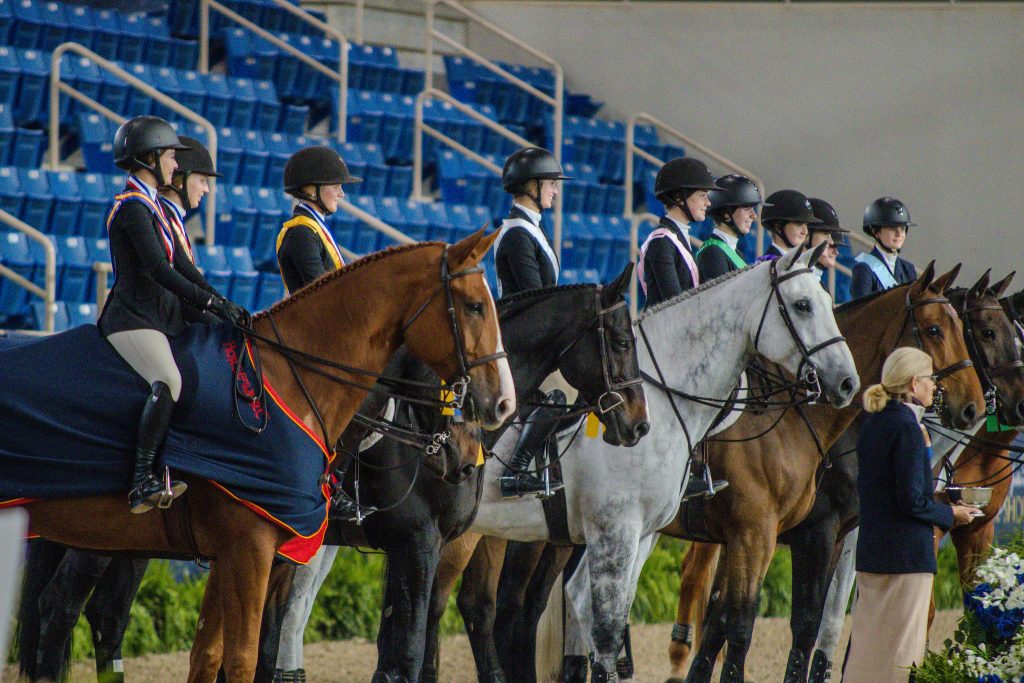
The USEF/NCEA Junior Hunter Seat Medal Finals provide a clear snapshot of this growth. While the medal was officially announced in 2016, publicly available data related to class size, winners, and participation is most consistently documented in USEF coverage beginning in 2021. Since then, participation has grown rapidly, expanding from 27 total competitors in 2021 to more than 100 by 2025—nearly quadrupling in just a few short years and prompting the invited field to double from 50 to 100 riders per coast.
Notably, since 2021, nearly every USEF/NCEA Junior Hunter Seat Medal Finals champion from both coasts—with one exception—has gone on to commit to established varsity programs such as Auburn University, Oklahoma State University, Southern Methodist University, Texas Christian University, the University of South Carolina, and the University of Georgia. These trends underscore the finals’ role as a direct pipeline to collegiate equestrian programs and reflect the broader growth in interest, competitiveness, and long-term planning surrounding college equestrian.
That pace of growth reflects both rising demand and the expanding pipeline of riders preparing for collegiate equestrian competition.
The finals follow a multi-phase format including jumping, flat, and bracket rounds on unfamiliar horses that closely mirrors the structure of collegiate equestrian competition, giving riders early exposure to the skills and pressures of riding at the varsity level. These finals not only showcase the next generation of collegiate equestrians but also reflect the rising participation and competitiveness in the sport. As more talented riders aim for these spots, it demonstrates a broader trend: college equestrian is growing in both interest and depth, with programs seeing increasing applications, larger equitation classes, and families planning years in advance to support their daughters’ collegiate riding ambitions.
Another clear indicator of the rising interest in college equestrian is the dramatic expansion of collegiate-level camps over the past decade. In 2016, very few NCEA programs offered structured, recruit-oriented camps. Auburn was one of the handful of teams providing prospective riders with firsthand exposure to college-level training, which I attended myself.
Today, nearly every NCEA program hosts multiple camps or clinics each year, ranging from college-prep sessions to multi-day overnight programs where high school riders compete in collegiate formats, stay in dorms, and learn directly from coaches about competition, eligibility, and life on an NCAA team. Programs such as SMU (since 2018), TCU (2020), Oklahoma State, and multi-session NCEA camps now attract riders nationwide, reflecting not only growth in volume but also a deeper level of engagement from families navigating the recruiting process. Coaches consistently report that these camps sell out almost instantly, with riders eager to develop their skills and understand recruiting expectations well before their junior and senior years.
Given the clear growth and momentum in collegiate equestrian, UC Davis’ decision to transition its varsity program is surprising. The Aggies have consistently produced competitive teams and helped student-athletes develop in a sport that continues to expand across the country. Varsity programs like UC Davis provide invaluable opportunities for young women to pursue their passion, compete at a high level, and gain leadership and life skills that extend far beyond the barn.
With camps selling out, equitation classes growing, and families planning years in advance to prepare riders for college, maintaining a varsity presence ensures these pathways remain open for the next generation of riders, while aligning naturally with the university’s strengths in veterinary, agricultural, and equine programs. Preserving programs like UC Davis’ varsity equestrian team is not just about competition, it’s about empowering young women to chase their dreams and shaping the future of the sport.
Help this team reverse this decision by signing their petition and showing your support for collegiate equestrian. https://keepdavisriding.com/
Want more articles about the UC Davis Equestrian Team decision?
What the Loss of UC Davis’s NCEA Division I Equestrian Team Means for the Future of Our Sport by Nina Thornton