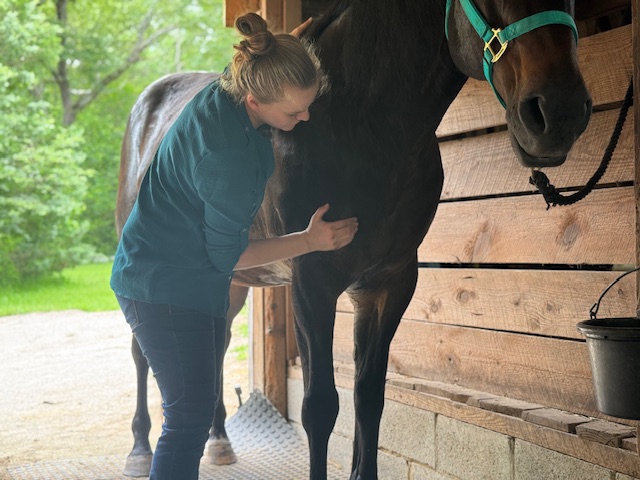
Why continuity, context, and access can determine whether help is possible when a horse needs it most
By LACEY GOTSHALL
There is an unspoken rule in horse ownership: you don’t complain about how hard it is. You expect the vet bills, the mud, the weather, the exhaustion, the uncertainty. You accept that horses don’t come with guarantees—and that loving them means living with risk. What no one prepares you for is how fragmented care becomes when something goes wrong—or when it happens away from home.
When my horse, JD, became profoundly lame, I wasn’t inexperienced or disengaged. I was involved. I asked questions. I had professionals around him. And still, everything felt disjointed. Each professional knew their piece. No one held the whole story. It is like it’s an accepted norm to not know.
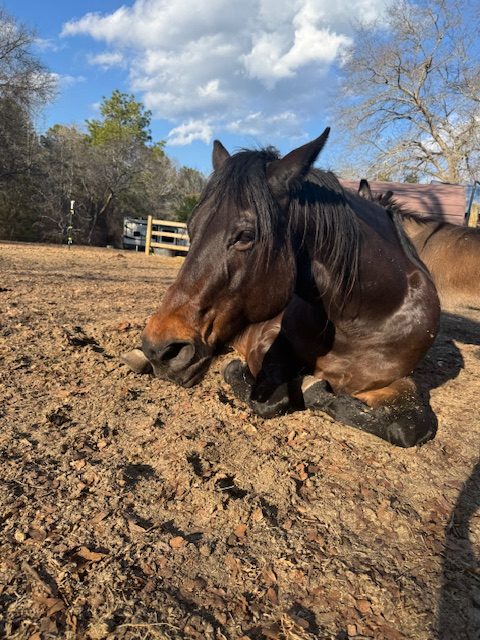
That reality crystallized the day my veterinarian called while JD was lying down in the field. Not resting. Lying down because standing hurt too much. The conversation was calm and compassionate. I was given two options. The first was a series of injections—$1,800 every two to three months—that might work. No guarantees. No clear endpoint. Just the hope of buying comfort, maybe time. The second option was euthanasia. There was no third door.
I remember standing there with my phone in my hand, doing the math every horse owner knows too well—not just financial math, but emotional arithmetic. What if it works? What if it doesn’t? What if I try everything and still lose him? This wasn’t a decision shaped by lack of care or commitment. It was shaped by uncertainty, incomplete information, and a system where no single person could tell me clearly what the path forward looked like.
When the Right Help Isn’t Local
What became clear after that call was the people who might save my horse were not in my backyard. They weren’t even in my state. The professionals I knew—good, capable people—did not know what to do next. Not because they weren’t skilled, but because JD’s case had moved beyond familiar playbooks. So I did what many horse owners eventually do when the margins disappear. I posted on social media. It wasn’t polished or strategic. It was a quiet, desperate explanation and the question no one wants to ask out loud: Does anyone know someone who can help?
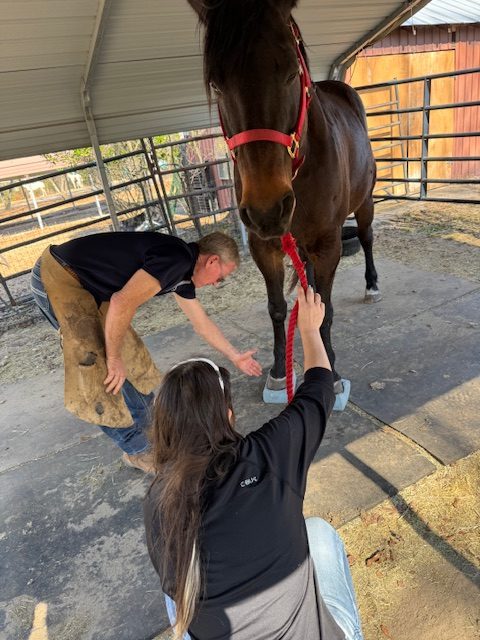
The response that changed everything didn’t come from a friend or my local network. It came from a farrier I had never met—more than a thousand miles away—who recommended another farrier nearly two thousand miles away. In that moment, I was throwing a Hail Mary pass to a stranger. I had no personal referral. No trusted thumbs-up. No idea if he would even respond.
But he did.
When we finally spoke, he didn’t promise miracles. What he said calmly was that he believed he could achieve pasture soundness. Not riding. Not performance. Just comfort. Just life. That alone felt like relief. But it came with strings.
The Information That Saves Horses Isn’t Dramatic
He wanted to know everything for the past six years. Diet changes—what, when, and why. Exercise history. Radiographs. Shoeing history going back six years. Management decisions I hadn’t thought about in years. As he spoke, my relief gave way to panic—not because the questions were unreasonable, but because the answers lived everywhere and nowhere at once. In emails. In old messages. In veterinary records from multiple practices. In my own memory.
I was scrambling to reconstruct a life. That was the moment I understood what had almost cost my horse his. What ultimately saved JD wasn’t dramatic. It wasn’t one catastrophic event or single bad decision. It was the boring details. Incremental diet changes. Subtle shifts in movement. Periods of rest that blurred together over time. Shoeing adjustments that made sense in the moment.
Those details don’t feel important when everything is fine. But when everything stops being fine—or when care happens away from home—they become critical. Professionals don’t look for single answers. They look for patterns. They need to see the whole arc—not to judge past decisions, but to avoid repeating them.
What Happens When Care Happens Away From Home
Horse owners travel. We compete. We trail ride. We relocate. We seek care in unfamiliar places, often under pressure. When something happens away from home, the professional who steps in has no context. They are meeting the horse for the first time, often urgently, and making decisions based only on what they can see at that moment.
At the same time, the owner—the only person who knows the horse’s history—is often distressed, overwhelmed, and afraid. We are expected to recall years of decisions clearly and accurately while managing fear and urgency. Important details get missed. Timelines blur. The why behind past decisions is lost.
When we return home, the responsibility of explaining what happened—why a decision was made, how it was approached, when changes occurred—falls entirely on the owner. Not in clinical language. Not with professional precision. But through memory and interpretation.
Later, when another professional steps in, they aren’t looking for summaries. They’re looking for context. They need reasoning, sequence, and response—details that are often lost once the crisis passes. This is where care quietly breaks down. Horse owners do not fail their horses out of neglect or indifference. We fail when we don’t know which details will matter later because when everything is stable, no one tells you that stability itself needs to be documented.
When the Whole Team Can Finally See the Same Picture
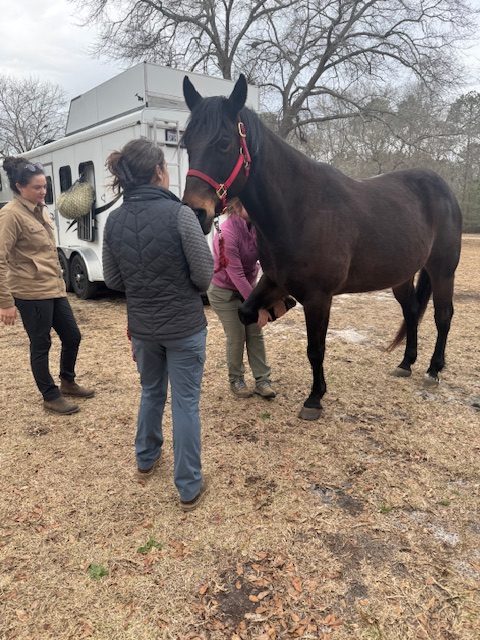
Once JD’s history was pulled together, and once missing details surfaced through careful questioning, other professionals were brought in from four different states. Each was highly qualified in their own field: veterinary medicine, farriery, nutrition, bodywork, chiropractic care, and herbal support.
For the first time, they weren’t working in isolation. They could see what the others were doing. They could understand why changes were made. They could track when improvement followed. When one suggested an adjustment, the response from the others was no longer uncertainty—it was agreement. Yes, do that. Yes, that fits. Yes, we’re seeing the same thing.
JD had been grade five lame. At his worst, he was lying down because standing hurt too much. Today, he is sound. He is comfortable. He is thriving. Not only did he surpass the goal of pasture soundness, he returned to work. And he did so without injections or medications, guided instead by a coordinated plan built on history, access, and collaboration.
What saved him wasn’t one extraordinary professional. It was the ability for many qualified professionals to see the same story and act on it together. Horse care doesn’t fail in dramatic moments. It fails quietly, over time. When continuity is replaced by recall. When care away from home never fully comes back. When critical decisions lose their context once the crisis passes.
Every horse owner should be able to answer one question—before something goes wrong: If I needed help tomorrow, or five years from now—or miles away from home—could I put my horse’s complete history into the hands of someone qualified to act on it? Not summarized. Not filtered. Not softened by hindsight. Just the facts—clear enough for trained eyes to see what we were never meant to diagnose alone.
We are entrusted with lives that cannot speak for themselves. We never intend to fail them. But the choices we make when everything feels boring, and the systems we rely on when we travel, may be the details that determine how successful we are when the unexpected arises in the unfamiliar places or even at home.
Lacey Gotshall is a third-generation horsewoman and lifelong owner focused on improving continuity, access, and collaboration in equine care. She is the founder of The Horse Concierge.