By Brooke Goodman
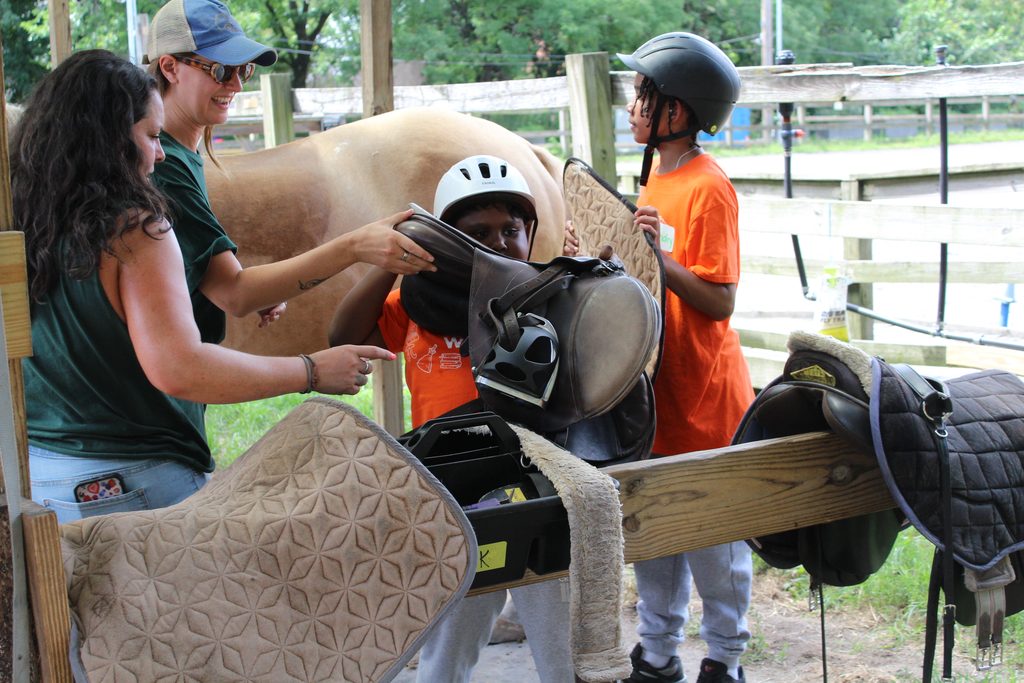
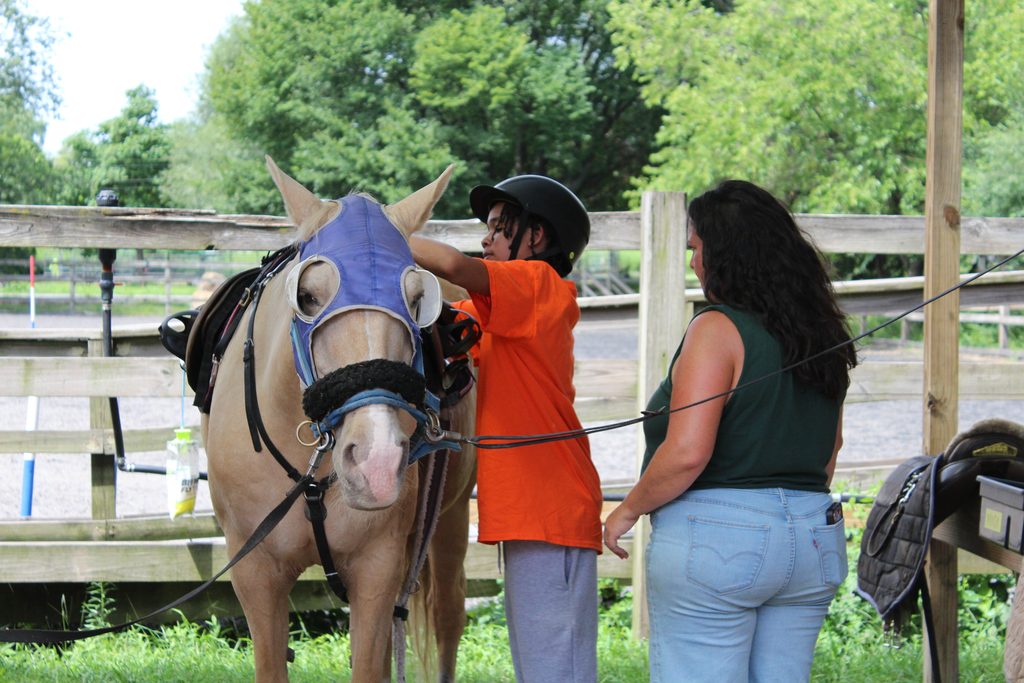
This summer, Gallop NYC, New York’s largest therapeutic riding nonprofit hosted campers from Win, the nation’s largest provider of shelter and supportive services for homeless families with children. By the end of their week, kids who have never gotten the chance to interact with horses previously were now riding, grooming, giving the horses their own nicknames, and asking when they could come back.
Every week, about 400 people come through Gallop NYC’s gates in Queens for mounted and unmounted programs. Alongside therapeutic riding lessons taught by PATH certified instructors, Gallop runs programs for seniors, for veterans in partnership with the VA and Columbia University on the Man O’ War Project, and a pony club for teens and young adults with autism. “Our community really looks like New York City,” Gallop NYC Executive Director, Jennie Bucove, says. “A lot of the people that come to us have never touched a horse, let alone ridden one, and they wouldn’t without us.”
Accessibility is central to the model. Many riders receive financial aid or ride for free, and Gallop NYC subsidizes the cost of every lesson. Lesson revenue covers about a quarter of the budget, and city funding for certain programs covers roughly another 20 percent. Donors, foundations, corporate supporters and fundraising events make up the rest.
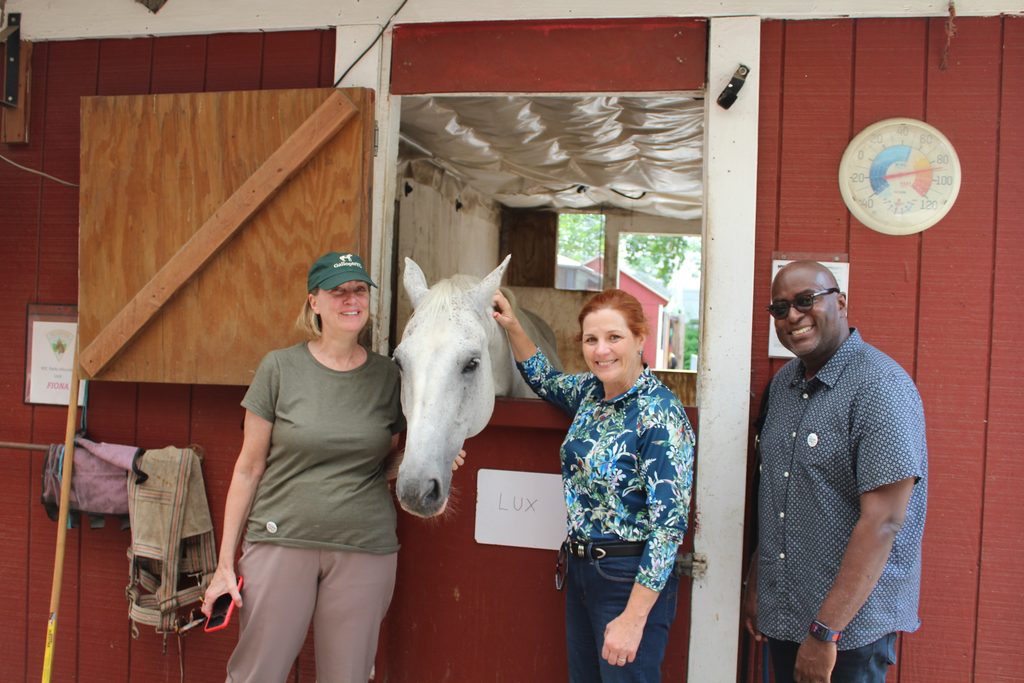
For WIN, a partnership with Gallop NYC was a natural fit. WIN operates 15 shelters and about 400 permanent apartments, and it serves about 7,000 people every night. Half of them are children. Ninety-two percent of WIN families are headed by single mothers, and 80 percent have experienced domestic violence. Families stay an average of 11.1 months, compared with about 15 months citywide, but as President and CEO, Christine C. Quinn, put it, “you stay as long as you need to stay.”
Quinn noted that 70 percent of the people in New York City’s shelter system are families with children, even though the system wasn’t designed with them in mind. “Being homeless is a trauma, for adults and especially for children,” she said. “When you’re a child and something goes wrong in the house, you think it’s your fault, even though it’s not.” WIN raises private money on top of its city contracts to fund services the base contracts don’t cover, including recreation and Camp WIN, which runs on any day the children aren’t in school.
Quinn knows firsthand how profound the bond with a horse can be, whether you’re in the saddle, grooming or hosing one off. She sees that same connection at work for the campers. “For these kids, to have moments of joy and peace is the greatest gift we can give them,” she said. Her hope is that when these children look back on a difficult chapter in their families’ lives, this will be something good to remember. Both WIN and Gallop NYC hope to expand the program next year, possibly beyond the summer.
Gallop NYC operates entirely outdoors on New York City Parks property. It has no indoor arena and no connection to the city sewer system. As a result, 15 to 20 percent of lessons are canceled each year because of snow, heat and poor air quality.
To fix that, Gallop NYC has launched a campaign for a new riding facility with an indoor arena, stalls, office space, proper bathrooms and a family viewing area. The project needs $11 million, and has raised about $6 million so far. Gallop NYC is also replacing the footing in its outdoor arena, which was already past its useful life when the organization took over the site 10 years ago, and it’s redoing the barn roof this winter. To learn more, visit gallopnyc.org/donate