Welcome to Trainer Tuesday! Each week we ask trainers a question and gather their answers for you. These trainers have a range of experience, backgrounds, and focus points of their programs, so the answers have as much variation as you would expect and also probably much more similarity.
This week’s question posed is: Why could a horse be more stiff bending in one direction, and how can you more evenly balance them out?
Here are their answers:
“Horses balance the swing of their hind legs from their jaw. A stronger corner of the mouth and more rigidity on one side often correlate to the weaker hind limb. No body is perfectly symmetrical, but our job as riders is to make ourselves and our horses as balanced (right and left and front and back) as possible.
After ruling out any gait asymmetries from a veterinary perspective, the task becomes strengthening and suppling the weaker corner of the body. Walking hills and slightly raised cavalettis strengthen the haunch. I love counter canter to address symmetry, too. I’m also a big believer in equine bodywork. It’s important to remember our horses are mirrors of our asymmetries, so riders need to treat themselves as athletes and cross-train, stretch, and strengthen!” -Claire Gordon-Neff
Read more from Claire here.
“1. Check your tack that the nose band is not too low, the snaffle bit fits, and the saddle is off the withers.
2. Is the rider sitting in the middle of the horse and not off to one side. The rider’s balance affects the horse’s balance.
3. Horses can be right-sided or left-sided. It is important to identify where the stiffness originates. For that, I use my vet, my chiropractor, my farrier, and my sense of feel on the horse’s back.
4. If the stiffness originates in the horse’s mouth, that issue is adjusted first. If the stiffness is in the horse’s back (and the horse is sound), then flat work is the focus.
5. Circles, caveletti, shoulder-in, counter canter help to connect a horse back to front, improving longitudinal and lateral balance.
6. Build up flexibility and muscles on the stiff or hollow side.” -Diane Carney
Read more from Diane or listen to her on The Plaidcast here.
“All horses have a stiff side and a supple side. I do believe horses go best when they are even side to side. When I ride a horse, I spend a lot of time working their stiff side to make it more even with their supple side. I do lots of lateral work and move them off my leg.” –Johanna Hyyppa
Read more from Johanna here.
“Stiffness in one direction is usually due to either soundness or rider wear and tear. It’s very typical that some riders hang on one rein more than the other or use one leg more than another, so as a trainer, I try to ride all our horses 1-2x a week and straighten them back out.
Sometimes it’s stiffness from soreness, and that is more often helped with vets and proper care. We try to always figure out what the stiffness is coming from and care for the horse so that it’s able to be as straight and soft as possible.
Great flat work and great vets usually fix the problem, and sometimes it is just the horse. Keep the flat work going with a good riding professional as much as possible so that they can stop the problem from getting worse.” –Dana Hart-Callanan
Read more from Dana here.
“Just like humans, horses are naturally asymmetrical and have a dominant side. It is only through progressive training that they develop more equal suppleness, strength and coordination on both sides of their bodies. Additionally, a rider who does not sit straight on the horse will cause inconsistencies in the horse’s movement; sometimes a horse moves on a straight track with one rider but becomes crooked with another.
Once the horse’s basic warm-up is complete, one helpful exercise to stretch him is called ‘springing’. To introduce the horse to springing, ride at working walk and ride down the long side of the arena, tracking left. Take your right elbow back, using a direct rein, applying just enough pressure that you can see the horse’s right eye. Hold the horse’s neck in this counterflexed position for half of the long side, then gently release. Ride through the short end, and then take your left elbow back, until you can see the horse’s left eye. Hold for half the arena, then gently straighten. When you ask for inside flexion, at first your horse may think you want him to turn and cut across the arena. To prevent this mistake, gently close the inner thigh and calf muscles, making your leg a barrier that the horse can’t press through. If the horse is quite green, stick with just counter flexion until he has more experience. Once the horse stays on the rail at the walk, try the whole sequence at the trot.” -Sally Batton, Excerpt from The Athletic Equestrian published by Horse & Rider Books
Order your copy of The Athletic Equestrian and Equicize by Sally Batton and Christina Keim here.
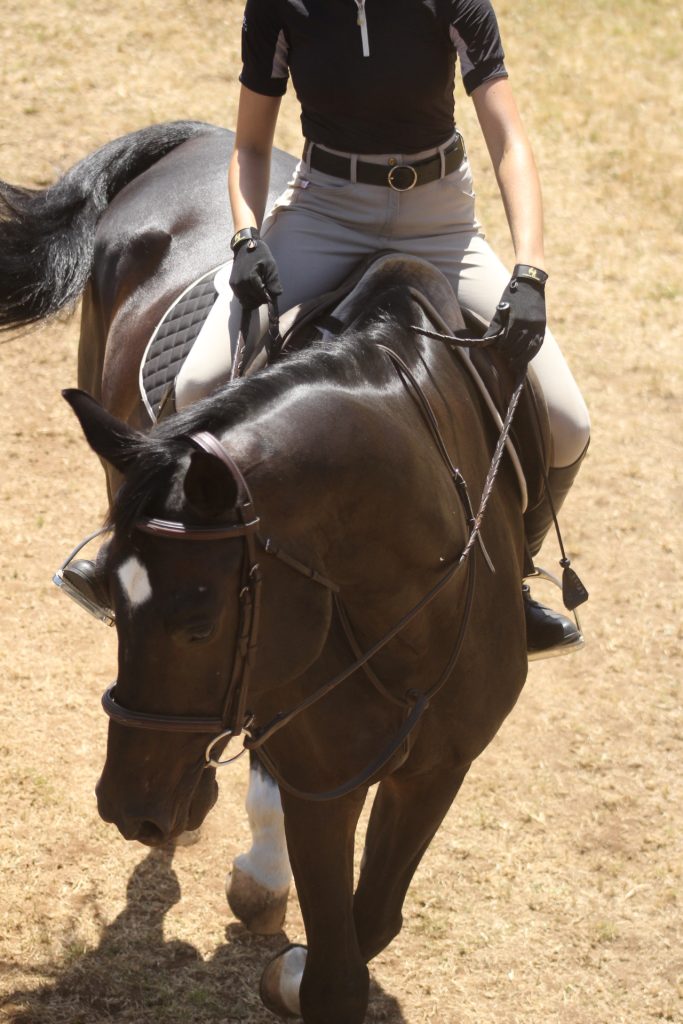
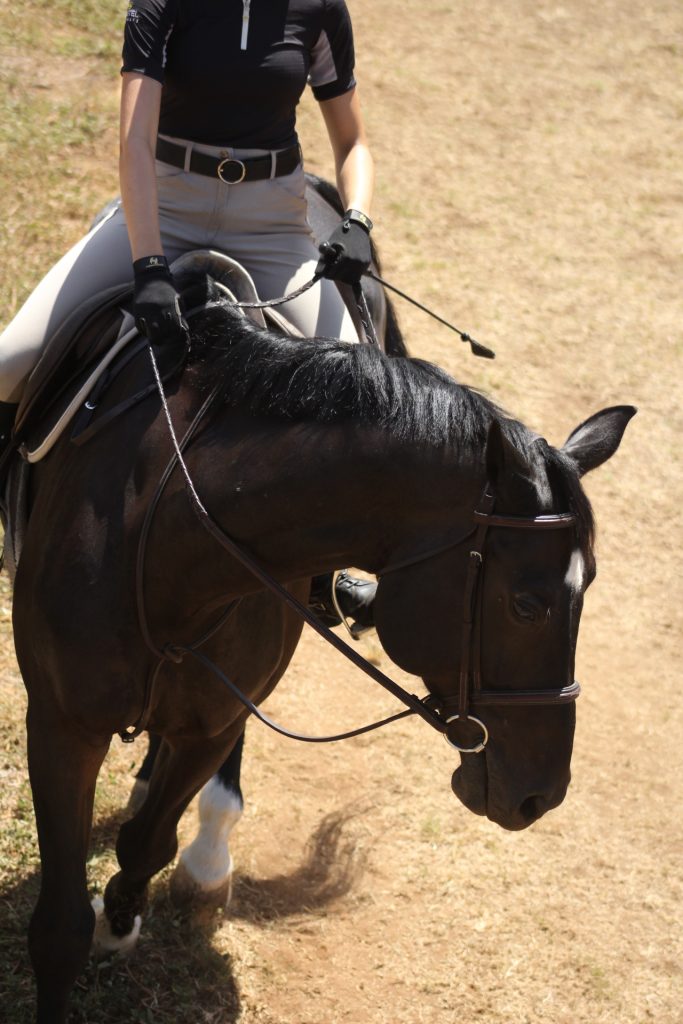
“This is an excellent example of a question that simply must be answered through the study of classical dressage. While there are many masters who have written about the horses’ “strong & weak sides,” without a basis of understanding of more basic principles of classical dressage, these works can be a challenge for a modern-day rider to understand.
Luckily, Dr. Gerd Heuschmann’s books, Balancing Act and Collection or Contortion, both do an excellent job of summarizing a wealth of knowledge and combine it with scientific inquiry and data to bring this very important topic to the masses. In regards to how to “balance” this asymmetry, the way modern horses and riders operate is absolutely worthy of continued scientific study, and riding the horse in the way that benefits his nature is absolutely a must— today now more than ever before. Our social license to operate as horse people depends on it.” –Mckrell Baier
Read more from Mckrell here.